
· by Michael Blair, Nashville's Shutters and Blinds
A blind or shade mounts one of two ways. Inside mount sits within the window frame, flush with the wall, and leaves the trim around it on show. Outside mount goes above the window, which Hunter Douglas’s installation guidance describes as installing the window covering above your opening, and it covers the opening along with some of the trim. Neither is better in general. Each suits particular windows, and the frame has more say than preference does.
What does an inside mount look like?
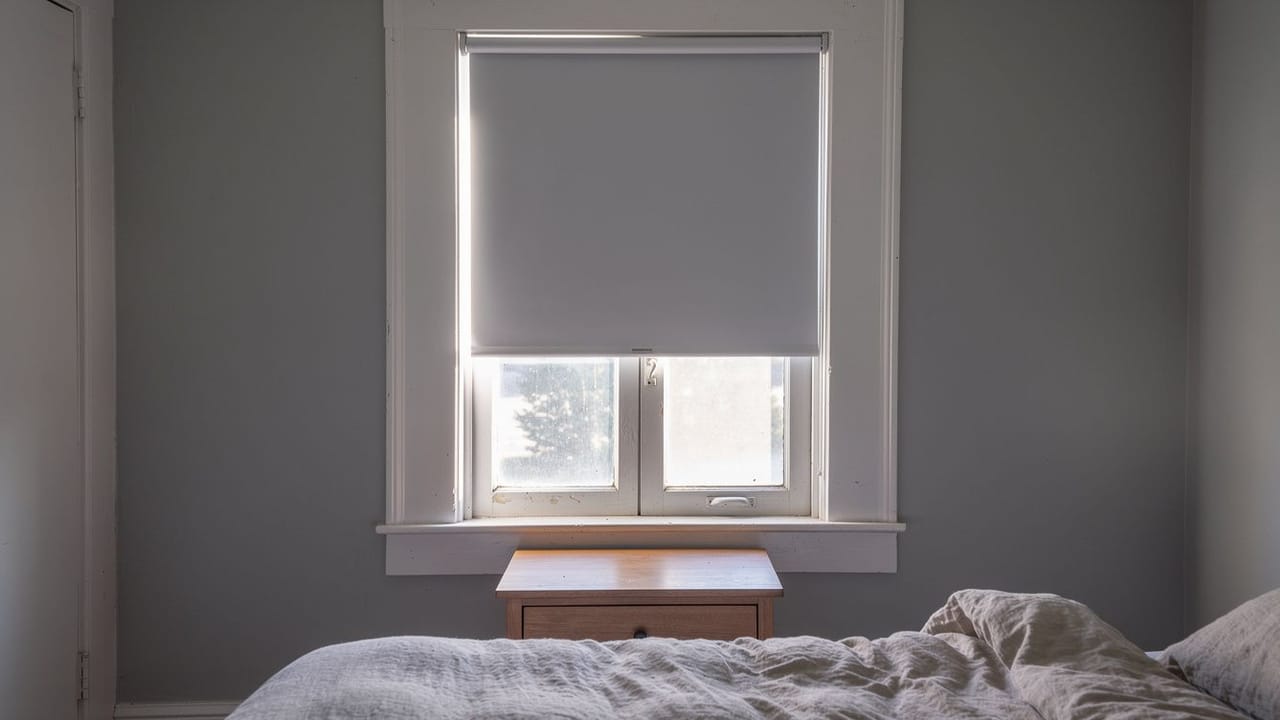
Inside mount is the cleaner look. The blind sits back in the opening, the casing stays visible, and nothing projects into the room. It asks two things of the window. The frame has to be deep enough to hold the headrail and let the blind run without hitting the sash or a handle, and it has to be square. Hunter Douglas puts "Are your window frames square?" first on its list of things to check, and has you measure the diagonals as well as the width and height to find out, which is why we take the diagonals before we quote an inside mount. The same guidance notes that a shade which telescopes to one side as it is raised may be on a window that is not level, and that many shades have an adjustable bottom rail weight to correct for it.
Its weakness is light at the edges. A blind inside the frame needs a little room to move, and Hunter Douglas counts which products have an inherent gap between the shade and the window frame among the questions to settle before buying. How wide that gap runs depends on the product, so we show it with a sample held in your own window instead of describing it, and the products we fit are on our blinds page. It matters most on a bedroom window that gets the morning sun.
Outside mount
Outside mount covers the opening and some of the wall around it, so the blind overlaps the frame instead of fitting inside it. It is also the way out when the frame will not take an inside mount. For a window that is not square, Hunter Douglas’s advice is to consider an outside mount, and we reach for it on some windows with shallow frames too, where the sash sits too close to the room side to leave space for a headrail. Shutters in an out-of-square opening are their own subject, covered in our post on fitting shutters when the window is not square.
The cost is that the blind becomes an object on the wall. The trim is covered, which suits a damaged or plain casing and wastes a good one, and the blind stands out from the wall by its own depth. We size the overlap to the maker’s figure for that product and mount it so the bottom rail clears the sill, and hung that way it reads as deliberate. Put up as an afterthought, it looks like a blind that did not fit.
- Inside: the cleaner look, trim on show, an edge gap on some products, needs frame depth
- Outside: overlaps the frame, covers the trim, the usual answer for a window that is not square
- Either: measure the window you are covering, not the one beside it
The depth test
Every product needs a certain depth to mount inside, measured from the room-side face of the frame back to the first thing in the way, usually the sash or a crank handle. Hunter Douglas lists "What mounting depth is needed to properly mount your installation hardware?" among the questions to answer before installing, and the figure differs from one product to the next, so we check it against the maker’s installation guide for the exact blind rather than a rule of thumb. We take the depth at the top of the frame, where the headrail goes, and look for latches, handles and alarm sensors along the way.
The mount changes more than the look. In its work on residential window attachments, Lawrence Berkeley National Laboratory notes that the energy performance of shades and blinds is less well understood than that of the windows themselves, in part because their mounting and the way people use them affect how they perform. For shutters, depth is one of the first numbers we take, since our plantation shutters are built to the opening.
How do you decide which mount a window gets?
Start with what the room is for. A bedroom has to be dark, and the National Heart, Lung, and Blood Institute’s sleep advice is to keep it quiet, cool, and dark. That points to outside mount, or to an inside mount with something to close the edges. Hunter Douglas’s light control page describes U-shaped side channels that absorb light before it enters the room and suit bedrooms, and adds that side panels or drapery help cover light gaps at the window; our post on getting a bedroom genuinely dark goes further into it. A living room where the trim is part of the look points to inside. A window that is out of square, too shallow for the product, or has a handle in the way of the headrail is one we steer to outside mount whatever the preference.
Then measure. For an inside mount, Hunter Douglas has you take the width at the top, center and bottom and the height at both sides and the center, then both diagonals, and our post on measuring for blinds walks through it. An outside mount we size to the area it has to cover, overlap included. Hunter Douglas also recommends that a window covering professional measure and install for proper fit and function, which is the visit we make when you ask us for a free estimate. A house can end up with both mounts, inside where it works and outside where it must, and we care more about one wall matching than about the whole house matching.
Sources
- Hunter Douglas, Window Treatment Installation & Operation — Outside mount installs above the opening; check whether frames are square; measure width at top, center and bottom, height at both sides and center, and diagonals; consider outside mount for a window that is not square; telescoping and the adjustable bottom rail weight; inherent gap between shade and frame; mounting depth for the hardware; professional measuring and installation recommended
- Hunter Douglas, Light Control & Privacy — U-shaped side channels absorb light, suited to bedrooms; side panels or drapery help cover light gaps at the window
- National Heart, Lung, and Blood Institute, Healthy Sleep Habits — Keep the bedroom quiet, cool, and dark
- Lawrence Berkeley National Laboratory, Residential Windows & Attachments — Energy performance of window attachments is less understood than that of windows because mounting and occupant use affect it
FAQ
Inside or Outside Mount, and How to Decide — questions
Do inside mount blinds let light in around the edges?
Often a little. A blind inside the frame needs room to move, and Hunter Douglas lists which products have an inherent gap between the shade and the window frame as one of the things to check before buying, so how much shows depends on the product. For a dark bedroom, choose outside mount, or pair an inside mount with side channels, side panels or drapery to cover the gaps.
How much depth do I need for inside mount blinds?
It varies by product, and the figure is in the maker’s installation guide for the blind you want. Measure from the room-side face of the frame back to the sash or any handle, at the top of the window where the headrail goes, and compare that with the depth the product needs.
Can I mix inside and outside mount blinds in one house?
Yes. Some windows suit one mount and some the other, and nothing requires one choice for the whole house. Choose window by window, and keep the mount the same where windows sit side by side on one wall or in one room where the difference would show.
Should outside mount blinds cover the trim?
They do by design, since an outside mount overlaps the frame instead of sitting inside it. That suits a damaged or plain casing but hides a handsome one. Where the trim is worth showing and the frame is deep and square enough, an inside mount keeps it visible; otherwise we size the overlap to the maker’s figure.